
When you step into a gym, one of the first things you notice consciously or not is the flooring. Gym floor mats are more than just a surface to stand on; they’re the foundation of your workout environment. They protect your joints, support heavy equipment, prevent injuries, and add to the overall look and feel of the space. But here’s the truth: no matter how premium or heavy-duty they are, without proper cleaning and maintenance, gym mats can quickly turn from an asset into a liability.
Sweat, dirt, and bacteria easily build up on mats, creating not only unpleasant odors but also serious health risks. If left unchecked, they can shorten the lifespan of your investment and even make workouts unsafe. The good news? With the right approach, keeping your mats fresh, clean, and durable is easier than you think.
This complete guide will walk you through everything from why cleaning matters, to daily routines, to avoiding common mistakes. By the end, you’ll have a clear plan for keeping your mats in top shape for years to come.
Why Cleaning Gym Floor Mats Matters
A clean gym is not just about aesthetics, it’s about safety, hygiene, and creating an environment where people actually want to work out. Here’s why keeping your mats spotless is non-negotiable:
Preventing bacteria, germs, and odor buildup
Think of how much sweat, skin cells, and dirt fall on the floor during a single workout session. Without regular cleaning, mats become breeding grounds for bacteria and germs. This leads to foul smells and, worse, potential skin infections. Practicing anti-bacterial mat cleaning ensures your workout environment stays healthy and inviting.
Extending the lifespan of mats
Whether you’ve invested in rubber gym flooring or softer foam mats, dirt and grime can break down their material over time. Dust particles act like sandpaper, scratching the surface and reducing durability. A proper cleaning schedule keeps mats strong, giving you better heavy-duty gym floor protection for the long haul.
Improving safety (non-slip surface)
Clean mats mean a non-slip workout flooring surface. Sweat and dirt can make mats slippery, increasing the risk of falls and injuries. A quick clean keeps them grippy, reliable, and safe.
Enhancing overall gym appearance
No one wants to train on dingy, smelly mats. Fresh-looking, odor-free fitness flooring creates a professional environment that motivates people to push harder. If you own a gym, it’s also a major factor in customer retention.
Types of Gym Floor Mats
Before diving into cleaning techniques, let’s look at the most common types of mats and why they matter. Each has its own cleaning needs.
Rubber Mats
Durable and long-lasting, rubber mats are common in both commercial and home gyms. They handle heavy weights and high foot traffic but require proper deep cleaning to remove sweat, chalk, and odors.
Foam Mats
Lightweight and cushioned, foam mats are popular for yoga, Pilates, and bodyweight workouts. While they offer comfort, they’re more prone to absorbing moisture and need frequent disinfection.
PVC or Vinyl Mats
These are water-resistant and relatively easy to clean, making them a low-maintenance option. However, they can still trap bacteria if not wiped regularly.
Interlocking Mats
Often used for covering large spaces, interlocking mats can be tricky because dirt and sweat slip between the seams. Routine cleaning and occasional disassembly are essential.
Daily Cleaning Routine for Gym Mats
Consistency is everything. A daily maintenance of fitness flooring routine ensures that germs don’t get the chance to build up. Here’s a simple, effective schedule:
Sweeping and vacuuming debris
Dust, chalk, and dirt accumulate quickly. A vacuum or broom removes this surface debris before it scratches or embeds into the mat material.
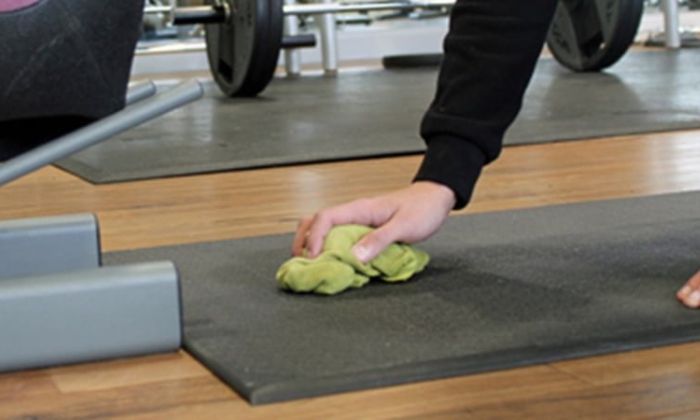
Quick wipe-down after workouts
Encourage members to use gym wipes or towels after every session. This small habit keeps mats looking fresh and prevents sweat buildup, making them truly sweat-resistant gym mats.
Using mild cleaners and disinfectants
Avoid harsh chemicals that can damage mats. Instead, choose eco-friendly mat disinfectants or diluted mild cleaners. They effectively kill bacteria while preserving the quality of the flooring. If you’re wondering how to disinfect exercise mats, the best method is spraying with a gentle cleaner, letting it sit for a minute, and wiping dry with a microfiber cloth.
This best cleaning routine for exercise mats should be done daily to maintain a safe and hygienic workout space.
Tips to Maintain Gym Floor Mats
Daily cleaning is the foundation, but long-term care requires smart habits. These tips will help you extend the life of your mats and maintain hygiene effortlessly:
Preventing mold and mildew
Moisture is the enemy of mats. Over-wetting or poor ventilation creates a breeding ground for mold. The key to mold prevention in gym mats is proper drying. Always ensure mats are completely dry before the next use.
Using gym towels and shoe policies to reduce dirt
Simple rules like requiring clean shoes or using towels reduce how much sweat and dirt reach the mats. Less dirt means easier maintenance and cleaner surfaces.
Proper drying techniques after cleaning
After using liquid cleaners, mats should never be left damp. Either air-dry them in a well-ventilated room or use fans. This prevents musty odors and keeps them truly odor-free fitness flooring.
Storing mats when not in use
If you’re using portable mats (for yoga or personal training), roll them up and store them in a cool, dry place. Avoid direct sunlight, which can break down material over time.
Common Mistakes to Avoid
Even with good intentions, many gym owners and users make mistakes that shorten the life of their mats. Here’s what not to do:
Using harsh chemicals that damage mats
Bleach, ammonia, and industrial cleaners may seem effective, but they eat away at mat material. Stick to gentle, best cleaners for gym mats to avoid long-term damage.
Over-wetting (causing mold)
Too much water is just as bad as too little cleaning. Over-wetting leads to trapped moisture and mold. Always wring out cleaning clothes and ensure mats are fully dry afterward.
Ignoring small stains and spills
That little sweat puddle or spilled drink may seem harmless, but over time, it seeps into the mat. Learning how to remove stains from gym mats quickly ensures they don’t turn into permanent damage or odor sources.
Conclusion
At the end of the day, gym floor mats are more than just flooring—they’re an investment in health, safety, and motivation. Clean mats mean fewer bacteria, fresher air, and safer workouts. Whether you’re running a commercial gym or maintaining a personal workout space, proper care is the difference between flooring that lasts a few months and flooring that lasts for years.
By following a best cleaning routine for exercise mats, using the right products, and avoiding common mistakes, you’ll enjoy mats that stay strong, clean, and truly supportive of every workout. From deep cleaning rubber mats to keeping foam mats odor-free, these steps give you heavy-duty gym floor protection and peace of mind.