
Creating a playground is more than just putting up a few swings and slides. To truly serve the entire community, it’s essential to design an inclusive playground—a space where children of all abilities, backgrounds, and ages can play, grow, and connect. The benefits of inclusive playgrounds extend beyond accessibility; they foster empathy, build community, and ensure every child experiences the joy and learning that come through play.
This comprehensive guide will help you understand the core components, design principles, and community involvement needed to create a truly inclusive play environment.

Understanding Inclusivity in Playgrounds
Inclusivity in playgrounds goes beyond providing accessible playground equipment. It involves designing play environments that accommodate a wide range of individual preferences and abilities. Whether a child has mobility challenges, sensory sensitivities, or cognitive disabilities, an inclusive playground ensures they can fully engage in play experiences that support their development and well-being.
Inclusivity means every child feels welcomed. It’s not about separate structures for children with disabilities—it’s about universal design principles that make the space enjoyable for everyone, including caregivers.
Key Principles of Inclusive Playground Design
To design an inclusive playground, certain principles should be at the heart of your project:
- Equity: All children, regardless of ability, should have equal opportunities to play.
- Diversity: Include a range of play components that appeal to various interests and skill levels.
- Flexibility: Create areas that accommodate a wide range of ages and developmental stages.
- Safety: Prioritize a design that allows safe interaction between children of different capabilities.
- Interaction: Design for social play, encouraging communication and friendship building.
Universal Design Approach
At the core of an inclusive playground lies the concept of universal design. This design strategy ensures the playground:
- Accommodates a wide range of abilities and preferences
- Offers simple and intuitive use for everyone
- Communicates necessary information effectively, whether through text, symbols, or sound
- Requires minimal physical effort
- Provides ample space for approach and use, even with mobility aids
These principles of universal design create a foundation that supports participation by all children and caregivers, including those using mobile devices or wheelchairs.
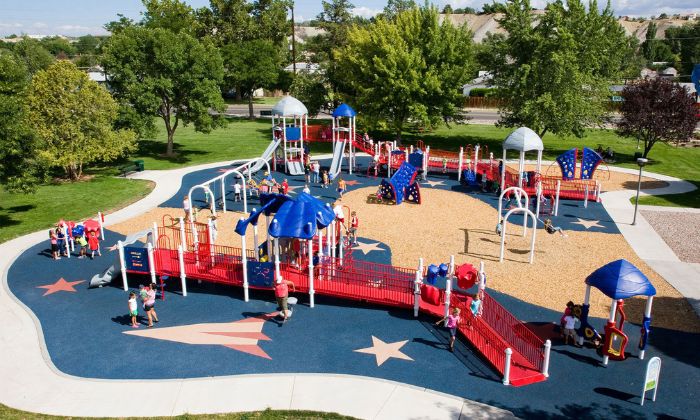
Accessibility Compliance
Compliance with accessibility standards, such as the ADA-compliant playground guidelines, is non-negotiable. These rules ensure the space includes:
- At least one accessible route to each type of play component
- A combination of ground-level and elevated play components accessible via ramps or transfer systems
- Adequate size and space for maneuvering, especially for children using mobility devices
However, going beyond compliance is crucial. While ADA sets the baseline, true inclusivity requires thoughtful playground designs that integrate accessibility without making children with disabilities feel separated or spotlighted.
Equity and Variety in Play
An inclusive playground should provide a range of individual preferences for different kinds of play:
- Active Play: Climbing structures, swings, and slides for physical activity.
- Imaginative Play: Themed play zones, role-play structures, and storytelling corners.
- Sensory Play: Textured surfaces, musical instruments, and water features.
- Quiet Play: Areas for rest or solitary exploration for children who may become overstimulated.
By offering this variety, playgrounds serve children of different personalities, interests, and developmental levels.
Components of an Inclusive Playground
Ground Surfacing
The base of any inclusive playground starts with ground surfacing that is safe, durable, and wheelchair accessible. Engineered wood fiber, poured-in-place rubber, and synthetic turf are excellent options. They meet safety standards and ensure mobility for all users.
Accessible Routes and Entry Points
Pathways should be wide, smooth, and provide space for approach to all play structures. Entry points must be easy to identify and use, with clear signage using perceptible information—visual, tactile, and auditory cues that guide all users.
Inclusive Play Equipment
Choose accessible playground equipment that supports all children. This includes:
- Swings with high backs and harnesses
- Multi-user see-saws and merry-go-rounds
- Ramps that provide access to elevated platforms
- Ground-level play panels
These elements ensure every child can enjoy and participate in play experiences that challenge and engage them.
Quiet and Sensory Zones
Not every child seeks the thrill of climbing or spinning. Some prefer gentle, sensory-friendly play areas where they can relax and recharge. Integrate zones with calming colors, soft textures, and play components like musical panels or tactile paths. These areas benefit children with autism, ADHD, or sensory processing disorders.
Social and Imaginative Play Areas
Storytelling zones, puppet theatres, and themed playhouses promote language skills and social bonding. Imaginative play sparks creativity and encourages children to express themselves, collaborate, and explore roles.
Seating and Shading for All
Inclusion isn’t limited to children. Caregivers, grandparents, and educators must also feel welcome. Include seating with back and arm support, shaded areas, and accessible viewing points throughout the park. This ensures supervision is safe and comfortable for everyone.
Community Involvement and Planning
An inclusive playground is a reflection of its community. Involve local stakeholders—parents, children, educators, disability advocates—in the design process. Their experience, knowledge, and language skills can help guide choices and identify real needs.
Ask:
- What barriers do children face in existing play areas?
- What play components are missing?
- How can the design encourage all children to play together?
Public meetings, surveys, and collaborative workshops create a shared vision and foster ownership of the space.
Maintenance and Longevity
Designing a playground is a long-term investment. Choose durable, weather-resistant materials and ensure proper installation. Regular maintenance checks are essential to keep equipment safe and functional.
Use materials that resist fading, cracking, and rust. Prioritize modular designs for easy repair or replacement. Also, consider a design that adapts to changing needs—adding new features as the community grows.
Why Choose Us?
At Empire Sarmad, we specialize in designing and installing inclusive playgrounds in Dubai. Our team understands the intricate balance between fun, safety, and accessibility. We don’t just sell playground equipment—we help you bring your vision to life.
Why clients trust Empire Sarmad:
- Wide range of accessible playground equipment
- Expertise in universal design principles
- Custom solutions for every budget and space
- Compliant with ADA standards and local regulations
- Thoughtfully designed sensory-friendly play areas
- Local knowledge and community-first approach
Whether you need a brand-new park, school yard upgrade, or urban pocket play space, Empire Sarmad ensures that every child, regardless of ability, gets to play, explore, and thrive.
Conclusion
To design an inclusive playground is to invest in the heart of a community—a place where children learn not only to climb, slide, and swing, but also to understand, empathize, and connect. By embracing universal design principles, integrating accessible playground equipment, and fostering inclusive play environments, you create a space that accommodates a wide range of needs and celebrates diversity.
Let’s build playgrounds that leave no one out. Partner with Empire Sarmad to turn your vision into a joyful, inclusive reality.