
When it comes to indoor playground safety, nothing matters more than ensuring our children are not only having fun but also staying safe. Imagine your child laughing on a soft play structure, climbing and sliding freely only for that joy to be shattered by a preventable accident. Every parent, teacher, and business owner should understand that behind the bright colors and giggles lies a serious responsibility: to keep these indoor playgrounds as safe as they are exciting.
This guide explores the safety standards you should know for indoor play areas covering the rules, regulations, and best practices that protect children and give parents peace of mind. If you operate or design an indoor playground, this isn’t just about compliance; it’s about creating a safe space where families can confidently play, connect, and grow.
Why Safety Standards Matter
Statistics on Indoor Play-Related Injuries
It’s tempting to think indoor playgrounds are immune to serious injuries, but the data tells a different story. According to the Consumer Product Safety Commission (CPSC), more than 200,000 children are treated annually in emergency rooms due to playground-related injuries and a growing number come from indoor play areas. These injuries range from minor scrapes to broken bones, concussions, and even long-term developmental impacts.
Most of these incidents are preventable. Lack of structural integrity, improper supervision, and poorly maintained equipment often lead to potential hazards that put children playing at unnecessary risk.
The Role of Safety Standards in Protecting Children
Safety rules and regulations are not just boxes to tick, they reduce the risk of serious harm. Proper indoor playground safety guidelines ensure every component, from the play structures to the flooring, is designed with child safety in mind. These rules don’t limit fun, they maximize safe play.
Whether it’s limiting entrapment zones, ensuring soft impact surfaces, or maintaining age-appropriate sections, following child injury prevention rules is the only way to build trust and ensure a truly child-friendly environment.
Legal Implications for Non-Compliance
Neglecting safety measures isn’t just dangerous, it’s expensive. Business owners and facility managers face lawsuits, fines, and even closures if they fail to meet national and local safety requirements. Not complying with ASTM International standards or product safety commission (CPSC) guidelines could lead to litigation in case of injury, not to mention reputational damage that’s hard to repair.
Key Safety Standards and Guidelines
Let’s explore the core safety frameworks every indoor playground must follow:
ASTM International Standards
ASTM International (formerly known as the American Society for Testing and Materials) sets the gold standard for indoor play equipment standards. Their guidelines (especially ASTM F1918) provide detailed requirements for soft play area regulations, including materials, surfaces, anchoring systems, and spatial configurations. These standards help prevent accidents by addressing everything from structural integrity to durability under frequent use.
By adhering to ASTM standards, indoor play centers demonstrate a commitment to safe play and operational excellence.
CPSC Guidelines
The Consumer Product Safety Commission (CPSC) publishes the Public Playground Safety Handbook, a critical document that outlines practical design and maintenance practices. While not legally binding, the handbook is widely used in the U.S. and internationally for assessing compliance.
These safety measures cover:
- Guardrails and barriers
- Protrusion and entanglement hazards
- Crush and shearing points
- Surfacing requirements to reduce the risk of injury
Aligning with CPSC guidelines shows that your indoor playground prioritizes protecting children and is informed by decades of injury data and research.
Local and International Regulations
Many regions also enforce local building codes and health regulations for public play areas. Internationally, standards vary but often mirror or adapt ASTM and CPSC compliance for play areas.
Understanding your jurisdiction’s specific obligations is essential especially if your playground is part of a school, daycare, or public venue.
Design and Layout Requirements
A well-planned design isn’t just about fun; it’s about flow, access, and safety. Consider these elements:
- Clear visibility for caregivers to monitor their children
- Separated zones for different age groups to avoid collisions or accidents
- Sufficient spacing between structures to prevent overcrowding and falls
Layouts must be intuitive, accessible, and follow safety guidelines that help prevent congestion and unintended hazards.
Equipment Safety and Maintenance
Even the best equipment becomes dangerous if not regularly inspected. Indoor play centers must have strict routines for checking:
- Stability of slides, bridges, and climbing frames
- Presence of sharp edges or broken components
- Anchoring and secure fittings
Scheduled maintenance must include cleaning, lubrication, and repair, ensuring that all play structures remain safe and engaging. If one bolt fails, the whole structure becomes a threat; it’s not worth the gamble.
Flooring and Impact Attenuation
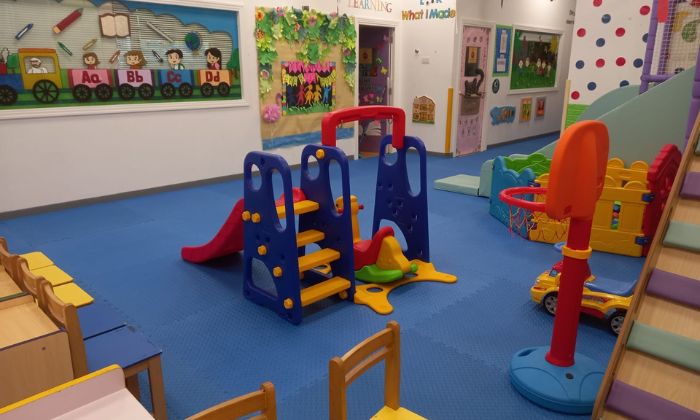
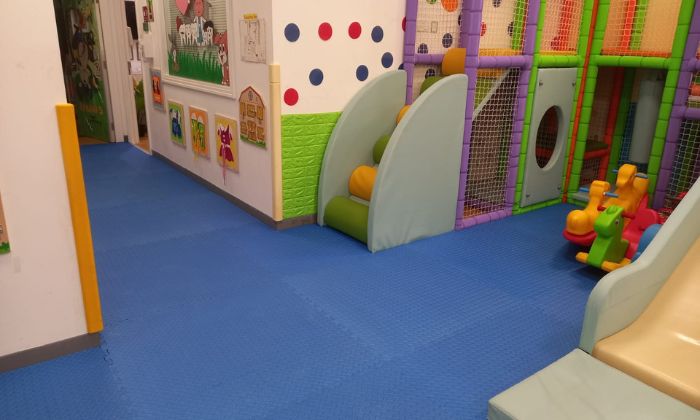
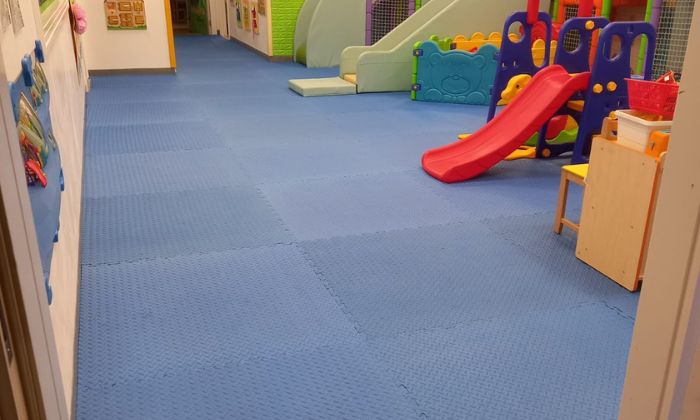
Falls are the number one cause of injuries in play areas, making flooring one of the most important safety investments.
Impact attenuation of the flooring’s ability to absorb shocks is a requirement under ASTM F1292. High-quality surfaces such as rubber mats, foam padding, or synthetic turf reduce the risk of serious injuries.
Make sure flooring is:
- Properly installed
- Maintained regularly
- Extended beyond fall zones of climbing structures
Don’t let a beautiful playground turn into a hazard just because the floor doesn’t cushion a fall.
Sanitation and Hygiene Protocols
In the age of health-conscious parenting, sanitation protocols are just as important as structural safety. Indoor areas must be cleaned daily, especially during flu season or outbreaks.
Standard hygiene protocols include:
- Regular disinfection of high-touch areas
- Shoe-free zones or shoe covers
- Availability of hand sanitizers
- Adequate air ventilation and filtration systems
Safe play isn’t just about preventing accidents it’s also about preventing children from exposure to harmful bacteria and viruses.
Supervision and Emergency Preparedness
Even the safest playground needs human oversight. Trained staff must be present during operational hours to monitor, guide, and intervene when necessary. But that’s just the start.
Emergency protocols should include:
- Clearly marked exits and evacuation maps
- First-aid kits and trained responders
- Accessible communication systems for emergencies
It’s vital to train staff not only in operations but in how to calmly respond when things go wrong. Preparation can save lives.
Age-Appropriate Equipment and Signage
One of the top indoor playground safety concerns is mixing children of vastly different ages. What’s safe for a 10-year-old can be dangerous for a toddler.
To maintain safety rules, operators must:
- Install signage indicating age ranges for each zone
- Use equipment designed for specific age groups
- Ensure barriers between toddler and older kids’ play areas
Clear visual communication through colors, symbols, and language helps caregivers and staff ensure that children are where they’re supposed to be.
Accessibility and Inclusivity Standards
Every child deserves to experience the joy of play. Indoor play equipment standards must also consider children with disabilities.
Accessibility features include:
- Ramps and wide entryways for wheelchairs
- Tactile paths for visually impaired children
- Sensory panels for neurodiverse kids
Following inclusive design standards isn’t just about compliance, it’s about compassion and creating a welcoming space for every family. Inclusivity is not an option; it’s a necessity for any modern indoor play area.
Conclusion
In a world where screen time dominates childhood, indoor play areas offer a vibrant and healthy alternative but only if they are safe, inclusive, and well-maintained. Complying with ASTM International and CPSC guidelines, implementing soft play area regulations, and constantly assessing risks are non-negotiables.
From flooring and equipment to supervision and sanitation, every element matters. As parents, caregivers, and business owners, we carry the responsibility of building spaces that don’t just entertain but protect.
Let’s commit to indoor playground safety not as a burden, but as a promise to give every child a place to laugh, learn, and grow without fear. Because behind every joyful scream is a heart we must keep safe.