
Water Splash Play isn’t just a fun and refreshing outdoor activity, it’s a powerful tool for early childhood education, brain development, and building essential life skills. Whether it’s toddlers giggling as they splash in puddles or older children creating imaginative games with water toys, this type of play activity offers profound benefits that go far beyond entertainment.
From motor skill development in children to boosting cognitive development and enhancing social skills, water splash play is a delightful and effective way for young children to meet their developmental milestones while having the time of their lives. Let’s dive into why Water Splash Play is not just play, it’s essential.
Physical Development Benefits
Gross Motor Skills
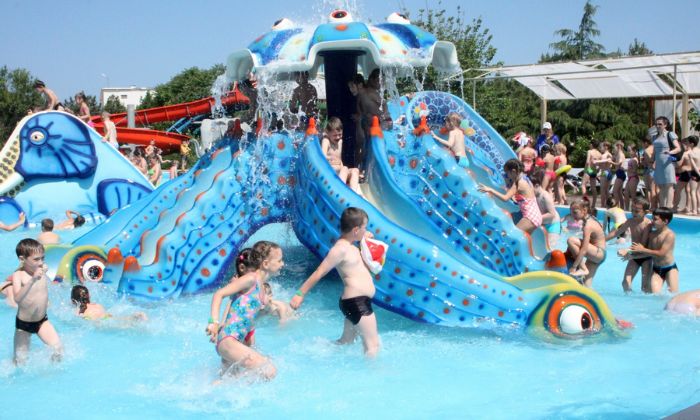
Splashing, jumping, running through sprinklers, and balancing on wet surfaces are more than just high-energy fun; they actively work on a child’s large muscles, contributing to gross motor skill development. These movements help young children strengthen their legs, improve balance, coordination, and build stamina.
Children need to move their bodies freely to develop agility and body awareness. Outdoor water activities for kids like running through a splash pad or carrying water from one bucket to another encourage exactly that. Each motion contributes to their physical development in a natural, unstructured way no gym equipment needed.
Fine Motor Skills
Pouring water from a cup, squeezing a water toy, or twisting a faucet these small actions strengthen fine motor skills. Water splash play can be surprisingly detailed, helping kids develop the precision needed for writing, tying shoelaces, and using tools.
Incorporating sensory activities with toys like spray bottles, cups, sponges, and eyedroppers enhances hand-eye coordination. These skills are part of the motor skill developments that pave the way for success in daily tasks and academics.
Cognitive Development
Problem-Solving and Exploration
Water is a curious medium. It flows, it splashes, it takes shape. Children learn by exploring, and water offers endless opportunities to test ideas and develop problem-solving skills. What happens if I block this stream? Can I make the water move faster? Will this float or sink?
These are not just questions, they are experiments. Through water splash play, cognitive development in toddlers is enhanced as they form hypotheses and test them, developing critical thinking and spatial reasoning.
Early STEM Learning
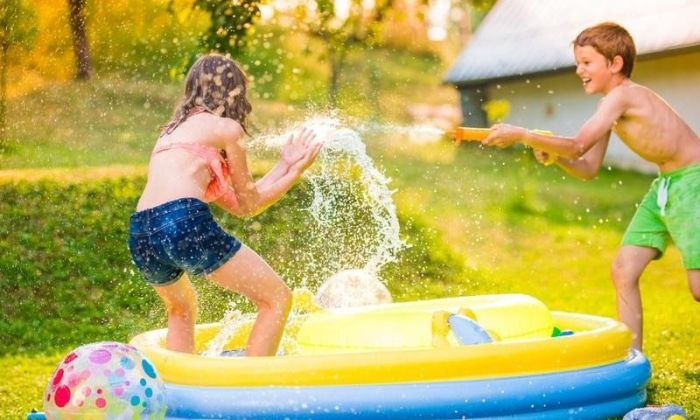
Yes, early childhood learning through play includes science, technology, engineering, and math. Splash play introduces concepts like volume, force, gravity, cause and effect, and measurement. As young children play with containers, funnels, and floating objects, they’re participating in early STEM learning with no textbooks required.
Imagine the wonder on a child’s face as they discover how to fill a bottle without spilling, or create a simple waterwheel. That’s brain development in action.
Sensory and Emotional Development
Sensory Stimulation
One of the most powerful benefits of sensory play is how it engages the body and mind. Water play involves sensory experiences like feeling the temperature, texture, and pressure of water. Adding items like bubbles, sponges, or ice cubes heightens these sensory play benefits, engaging touch, sight, and even sound.
These types of play help young children understand their environment while calming overstimulated nervous systems. This makes water splash play especially beneficial for children with sensory processing challenges.
Emotional Regulation and Relaxation
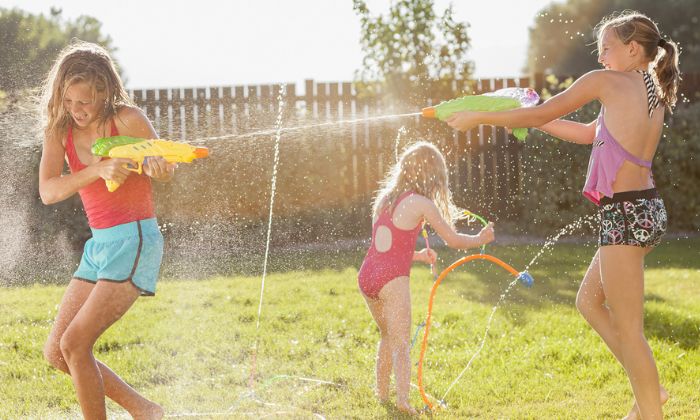
Water has a natural calming effect. Watching it move, hearing it splash—these sensations help children self-soothe. Splashing in water can help release pent-up energy or anxiety, contributing to emotional regulation.
For many children, especially those who struggle with emotional outbursts, water play becomes a tool for managing big feelings. It teaches them to slow down, focus, and return to a state of balance.
Social and Communication Skills
Cooperative Play
Water brings children together. Whether they’re sharing a water table, filling buckets for a “car wash,” or chasing each other with water balloons, these play activities foster teamwork and social skills.
They learn turn-taking, cooperation, and how to navigate group dynamics—skills essential for school and life. These moments may seem chaotic from the outside, but they’re loaded with early childhood education value.
Language Development
As children play, they talk. They describe what they’re doing, name objects, ask questions, and give directions. All of this contributes to rich language development. Phrases like “fill it up,” “pour it out,” and “look how fast it goes!” are practical, meaningful uses of language.
When educators and parents participate, asking open-ended questions or introducing new vocabulary (like “evaporation,” “flow,” or “absorb”), it takes the learning to another level. Children connect words with actions, deepening their cognitive development through conversation.
Encouraging Creativity and Imagination
Water is a blank canvas. One moment, it’s a potion. Next, it’s a river for toy boats, a soup in a mud kitchen, or the ocean for a sea adventure. Splash play supports creative development by letting children invent and pretend.
This kind of open-ended play fuels the imagination, builds storytelling skills, and allows children to express themselves. It nurtures independence and confidence traits that help them thrive across every stage of life.
Safe and Accessible Fun for All Children
One of the best parts about Water Splash Play is that it’s accessible. You don’t need expensive equipment; a bucket, hose, or even a rainstorm can do the trick. It’s inclusive, adaptable, and easy to modify for children of all abilities.
Whether in the backyard, at a community splash pad, or in a classroom setting, water play is a safe, inclusive way to encourage your child to move, think, feel, and connect with others. It meets developmental milestones naturally without pressure or expectation.
Tips for Parents and Educators
To make the most out of water splash play, consider these practical tips:
- Supervise at all times: Even shallow water can pose a risk. Always watch children during water play.
- Add variety: Include different textures (sponges, foam, water beads), temperatures (warm/cool), and tools (funnels, colanders, cups).
- Ask questions: “What do you think will happen?” “Why do you think that floats?” This promotes problem solving skills and critical thinking.
- Mix in learning: Use play to introduce new words, counting, measuring, or color mixing.
- Be flexible: Let children lead. Their creativity and curiosity are the best guides.
- Dress for mess: Let kids get wet and muddy. The joy (and the learning) is worth it.
Conclusion
Water Splash Play is more than a summer pastime; it’s a cornerstone of early childhood development. It supports motor skill development, enhances cognitive development, encourages language development, fosters social skills, and promotes emotional well-being.
It gives children the freedom to explore, experiment, and express themselves skills they’ll carry for a lifetime. So the next time you see a puddle, sprinkler, or stream, don’t rush your child past it.